

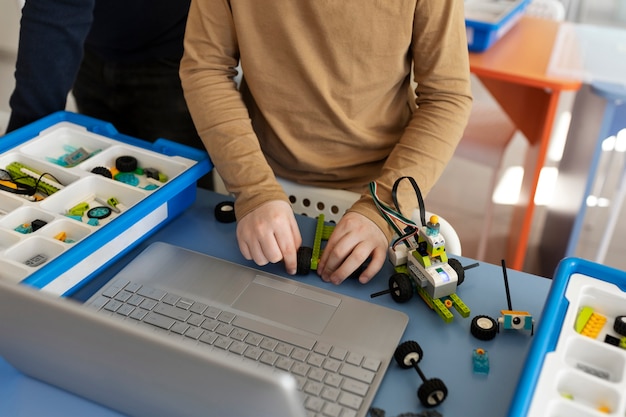
The rise of technology in modern education has been nothing short of transformative. The impact of computers on learning has reshaped how students acquire knowledge and how educators deliver it. From elementary schools to universities, computers have become indispensable tools that enhance learning, making it more engaging, efficient, and accessible. But what exactly makes computers so vital in today’s educational landscape?
The Digital Classroom
One of the most significant ways technology in education has transformed the traditional classroom is by making learning more interactive. Gone are the days when a chalkboard and textbooks were the only tools for instruction. Now, with the advent of computers and digital devices, students can immerse themselves in virtual simulations, watch educational videos, and participate in interactive exercises that make complex topics more digestible.
Computers allow teachers to move beyond lecture-based teaching. They enable real-time collaboration through shared documents and learning platforms, where students can work together on projects, share ideas, and receive instant feedback from their peers and instructors. This collaborative environment nurtures creativity and problem-solving, two skills that are highly valued in today’s world.
Expanding Access to Education
Computers have dramatically expanded access to quality education for people around the globe. In the past, physical location often dictated the resources available to a student. However, with the impact of computers on learning, geographical boundaries no longer present the same barriers. Through online learning platforms and educational websites, students from underserved regions can now access the same materials and courses as those in prestigious schools.
Moreover, computers and the internet have made it possible for people to learn at their own pace. Students with different learning styles or those who need extra time to grasp a concept can now replay lessons, review digital materials, or even access alternative explanations through educational videos and articles. The rise of massive open online courses (MOOCs) is a prime example of how computers are democratizing education, allowing anyone with internet access to learn from top universities for free or at a low cost.
Personalized Learning
Another exciting development in educational tech advancements is the ability to personalize the learning experience. Thanks to sophisticated algorithms and artificial intelligence, computers can now analyze a student’s strengths and weaknesses, adapting lessons to suit their individual needs. This kind of tailored learning ensures that no student is left behind, as they can receive targeted support in areas where they struggle.
For example, adaptive learning software can offer quizzes and exercises that become progressively more difficult as the student improves, providing a customized challenge level. This keeps students engaged and motivated, fostering a sense of achievement as they conquer each milestone at their own pace. It also allows educators to pinpoint specific areas where a student may need additional support, ensuring a more tailored educational experience.
Enhancing Teacher Efficiency
While the computers transforming classrooms narrative often focuses on students, teachers have also benefited tremendously from this technological shift. Computers have taken over many administrative tasks that were once time-consuming, such as grading, attendance tracking, and lesson planning. With the help of educational software, teachers can automate tests and assessments, leaving them more time to focus on what truly matters – engaging with students and refining their teaching methods.
Furthermore, teachers now have access to a wealth of online resources, from lesson plans to instructional videos, that can enhance their classroom strategies. These resources allow educators to diversify their teaching methods, ensuring that students remain engaged through different types of content delivery, whether through videos, interactive games, or online discussions.
The Role of Virtual Reality and Gamification
One of the most fascinating educational tech advancements is the integration of virtual reality (VR) and gamification into the learning process. VR allows students to explore new worlds, experience historical events, and engage with subjects in ways that were once impossible. Imagine learning about ancient Egypt by virtually walking through the pyramids or studying biology by interacting with a 3D model of the human body. These immersive experiences can significantly deepen understanding and make learning fun and memorable.
Gamification, on the other hand, applies game-like elements—such as point systems, leaderboards, and rewards—to the learning environment. By transforming lessons into engaging challenges, students are more likely to stay motivated and enjoy the learning process. The combination of VR and gamification in the classroom is just one example of how computers are transforming classrooms in innovative ways.
Lifelong Learning and Career Preparation
In addition to their role in primary and secondary education, computers are also instrumental in preparing students for the workforce. Today’s jobs demand a high level of digital literacy, and by incorporating computers into everyday learning, schools are equipping students with the skills they will need in the future. From basic typing and word processing to more advanced tasks like coding and data analysis, students are gaining real-world skills that will benefit them long after graduation.
Moreover, computers enable lifelong learning. With the wealth of online courses and resources available, professionals can continue to develop new skills throughout their careers. This flexibility to adapt and grow is essential in a rapidly changing world, where staying updated with the latest technology and knowledge can be the key to career advancement.
Conclusion
The impact of computers on learning is profound and far-reaching. By introducing new ways to engage with content, expanding access to education, and fostering personalized learning, computers have undeniably transformed classrooms and teaching methods. As educational tech advancements continue to evolve, it is clear that computers will play an even greater role in shaping the future of education, empowering both students and teachers to achieve their full potential.